
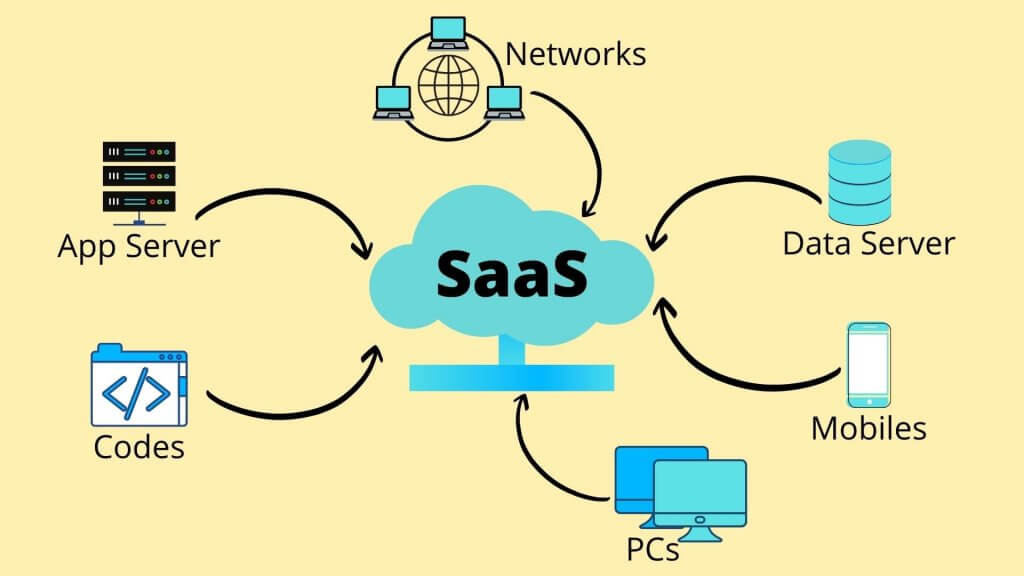
For entrepreneurs, startups, and established businesses looking to launch a software-as-a-service (SaaS) product, the path to market has traditionally involved two challenging routes: investing hundreds of thousands of dollars and 6–18 months in custom development, or attempting to build a solution from scratch with limited technical resources. Today, a third, transformative path has emerged—one that dramatically reduces both time-to-market and technical risk.
Welcome to the world of white-label SaaS scripts: fully functional, customizable software solutions you can license, brand as your own, and launch in a matter of weeks.
As a professional marketplace for developers, Dotartisan connects entrepreneurs with the creators of these powerful, ready-to-deploy scripts. This guide will explore what white-label SaaS scripts are, which types offer the highest potential, and why they represent one of the smartest investments for launching a digital product in today’s competitive landscape.
What Exactly Are White-Label SaaS Scripts?
A white-label SaaS script is a pre-built, source-code-included software product designed to solve a specific business problem. It comes with core functionality fully developed, tested, and documented. You purchase a license to the code (often with rights to resell the software as a service under your own brand), then customize its appearance, configure its settings, and host it on your infrastructure.
Think of it not as buying a finished product off a shelf, but as acquiring a fully constructed, code-compliant building. The plumbing, electrical, and structure are complete. You get the keys (the source code) and can now paint the walls (customize the UI), arrange the rooms (configure workflows), and put your name on the door (your branding) to open for business.
This model stands in contrast to:
Building from Scratch: High cost, high risk, long timeline, and full technical burden.
Using a "No-Code" Platform: Faster setup but limited customization, perpetual licensing fees, and no asset ownership.
Reselling a 3rd Party SaaS: You simply refer customers to another company's platform for a commission, with zero control over the product, pricing, or customer data.
White-label scripts give you the coveted middle ground: speed to market, ownership, and control.
The Compelling "Why": Benefits of the White-Label Script Model
1. Drastically Reduced Time-to-Market
This is the most significant advantage. A mature SaaS product can take a skilled team a year or more to build. A white-label script has already undergone this development cycle. Your focus shifts from building to branding, configuring, and marketing. According to a 2023 analysis by Gartner, companies that leverage pre-built, composable software components can reduce initial development timelines for new digital products by 60–80%. This allows you to capitalize on market opportunities before they vanish.
2. Substantially Lower Upfront Cost & Risk
Hiring a development team for custom work requires a massive upfront investment, often exceeding $100,000 for a minimally viable product (MVP) with complex features. A white-label script represents a fraction of this cost—typically between $1,000 and $15,000 for a full, production-ready solution. You are not funding the research, architecture, and initial coding phases; you are paying for the finished foundation. This turns a capital-intensive project into an accessible one.
3. Proven, Tested Functionality
Reputable scripts sold on marketplaces like Dotartisan come from experienced developers. The core features have been built, debugged, and stress-tested. You avoid the countless unforeseen bugs and architectural dead-ends that plague greenfield projects. You're starting with a stable, functional base.
4. Full Ownership & Control
Unlike using a no-code platform or reselling someone else's service, you own the license to the code. You host it on your servers (or preferred cloud provider), you control all customer data, you set the pricing, and you manage the customer relationship. Your business's value and equity are built on an asset you control.
5. A Foundation for Customization & Scaling
The provided source code is your starting point, not your ceiling. As your business grows and you learn from your customers, you can hire developers to add unique features, integrate with other tools, and scale the infrastructure. The script provides the 80% of common functionality, freeing your resources to build the 20% that makes your offering unique.
What to Buy: High-Opportunity White-Label Script Categories
When evaluating scripts, look for categories with proven business models, recurring revenue potential, and broad target markets. Here are some of the most lucrative and popular types available.
1. Business Process & Productivity Tools
These scripts automate or streamline essential, universal business tasks.
What to Look For: Project Management platforms, CRM (Customer Relationship Management) systems, Help Desk & Live Chat software, Invoice & Billing platforms, HR & Employee Onboarding suites.
Why They're a Smart Buy: Every business, from solo freelancers to mid-sized companies, needs these tools. The markets are vast and conditioned to pay monthly subscriptions. Differentiation comes from niche targeting (e.g., a CRM for real estate agents, a project manager for marketing agencies) and superior user experience.
Key Feature Checklist: Multi-user roles, reporting dashboards, API access for integrations, mobile-responsive design, and template libraries.
2. Marketing & Sales Automation Platforms
Businesses constantly seek an edge in generating leads and converting customers.
What to Look For: Email marketing automation, Landing page builders, Sales funnel creators, Social media management & scheduling tools, SEO audit and tracking platforms.
Why They're a Smart Buy: Marketing is non-optional and constantly evolving. These tools deliver measurable ROI, making them an easier sell. You can target specific industries with tailored template packs and training.
Key Feature Checklist: Visual automation builders, analytics and conversion tracking, contact list management, A/B testing capabilities, and integration with popular ad platforms (Google Ads, Meta).
3. Community & Content Monetization Hubs
The creator economy and niche communities are booming. These scripts provide the infrastructure to build and monetize an audience.
What to Look For: Online course/LMS (Learning Management System) platforms, Membership site builders, Podcast hosting & monetization platforms, Newsletter subscription managers, Forum/community software.
Why They're a Smart Buy: You enable individuals and brands to build independent revenue streams. The business model (subscriptions, one-time sales) is clear and lucrative. Success depends on your ability to market to creators and provide them with excellent support.
Key Feature Checklist: Drip content scheduling, multiple payment gateway support, student/certification tracking, community engagement features (comments, groups), and content protection (DRM).
4. Niche Industry-Specific Solutions
These scripts solve deep problems for a specific vertical, often allowing for higher price points.
What to Look For: Appointment booking for service businesses (salons, clinics), Restaurant online ordering & delivery management, E-learning platforms for schools/tutors, Property management systems for landlords, Gym & fitness class management software.
Why They're a Smart Buy: Competition can be lower than in broad categories, and customer acquisition is more targeted. You become an expert in that industry's workflow. A 2024 report by IDC highlighted that vertical-specific SaaS solutions are experiencing growth rates nearly 2x that of horizontal applications, as they deliver more precise value.
Key Feature Checklist: Industry-specific terminology and workflows, integration with common tools in that niche (e.g., QuickBooks for property management), and robust scheduling/calendar logic.
The Critical "How": Your Evaluation Checklist Before You Buy
Not all white-label scripts are created equal. Due diligence is essential. Here is a step-by-step framework to assess a potential purchase.
1. Technical Viability & Code Quality
Source Code Access: Confirm the license includes full, unobfuscated source code in a mainstream language (PHP/Laravel, Python/Django, Node.js, Ruby on Rails).
Documentation: Is there comprehensive technical documentation for installation, configuration, and customization? Are APIs well-documented?
Tech Stack: Is it built with modern, secure, and maintainable frameworks and libraries? Outdated tech can be a security and scaling nightmare.
Demo & Testing: Always test a live demo thoroughly. Check for speed, intuitiveness, and core feature functionality.
2. Commercial & Licensing Terms
License Type: Understand exactly what you're buying. Is it a single-use license, an unlimited client license, or a revenue-share model? Most entrepreneurs need an "unlimited client" or "royalty-free" license.
Support & Updates: What post-purchase support is included (and for how long)? Are future updates and security patches included? This is crucial for long-term viability.
Refund Policy: Reputable sellers often offer a 7-30 day money-back guarantee, providing a safety net for your evaluation.
3. Market Readiness & Customization Path
UI/UX Design: Is the interface modern, clean, and user-friendly? A poor UI will hinder adoption, even if the backend is powerful. Assess how easy it is to rebrand (changing logos, colors, fonts).
Feature Roadmap: Does the seller have a history of updating the product? What features are planned? An abandoned script is a liability.
Community & Reviews: On a marketplace like Dotartisan, check the developer's reputation, read user reviews, and see how they respond to questions and issues.
From Purchase to Profit: Your Launch Roadmap
Buying the script is just step one. Your execution determines success.
Customization & Branding: Invest in a designer to tailor the UI/UX to your target audience. This is where you make the product feel like yours.
Configuration & Testing: Set up all core features, payment gateways (Stripe, PayPal), email services (SendGrid, Mailgun), and hosting. Conduct rigorous user acceptance testing (UAT).
Documentation & Support: Create clear help guides, tutorial videos, and a knowledge base for your users. Plan your customer support channels (email, chat).
Marketing & Sales: Develop your website, pricing pages, and sales copy. Create content that demonstrates the value of your solution. Consider offering a free trial or freemium tier.
Launch & Iterate: Go live. Gather user feedback, monitor performance, and plan your first rounds of custom feature development to address your market's unique needs.
A case study from a Dotartisan buyer illustrates this perfectly: "We licensed a white-label help desk script for $4,200. After 6 weeks of customization and branding, we launched 'SupportDesk Pro' targeting e-commerce businesses. Within 90 days, we had 22 paying clients on monthly plans. The script gave us a professional-grade product immediately; our focus was purely on marketing and customer success."
Common Pitfalls to Avoid
The 'Feature Bloat' Trap: Don't choose a script because it has 100 minor features. Choose the one with rock-solid core features that match your market's primary needs.
Underestimating Ongoing Costs: Budget for hosting, support, security monitoring (SSL certificates, firewalls), and future development work.
Neglecting Marketing: A great product doesn't sell itself. Your primary job post-launch is CEO (Chief Evangelism Officer).
Skipping Legal Advice: Have a lawyer review the software license agreement and help draft your own Terms of Service and Privacy Policy for end-users.
Conclusion: Building Your Future on a Solid Foundation
The era where building a SaaS company required a massive technical team and venture funding is over. White-label SaaS scripts have democratized software entrepreneurship. They allow visionaries, marketers, and industry experts to launch viable, competitive software businesses by leveraging the technical work of expert developers.
The strategic question is no longer "Can we build it?" but "What should we build it for, and who will we serve?"
By focusing your resources on customization, branding, marketing, and customer experience—rather than the multi-year grind of foundational development—you align your effort with the highest levers of business value. You turn a technical challenge into a market-facing opportunity.
Ready to explore your SaaS idea? Browse the curated selection of production-ready, fully customizable white-label scripts from independent developers on Dotartisan. Find the perfect code foundation, acquire your license, and start building the software business you've envisioned.
Visit Dotartisan today to discover scripts, connect with developers, and begin your launch journey.
Comments (0)