
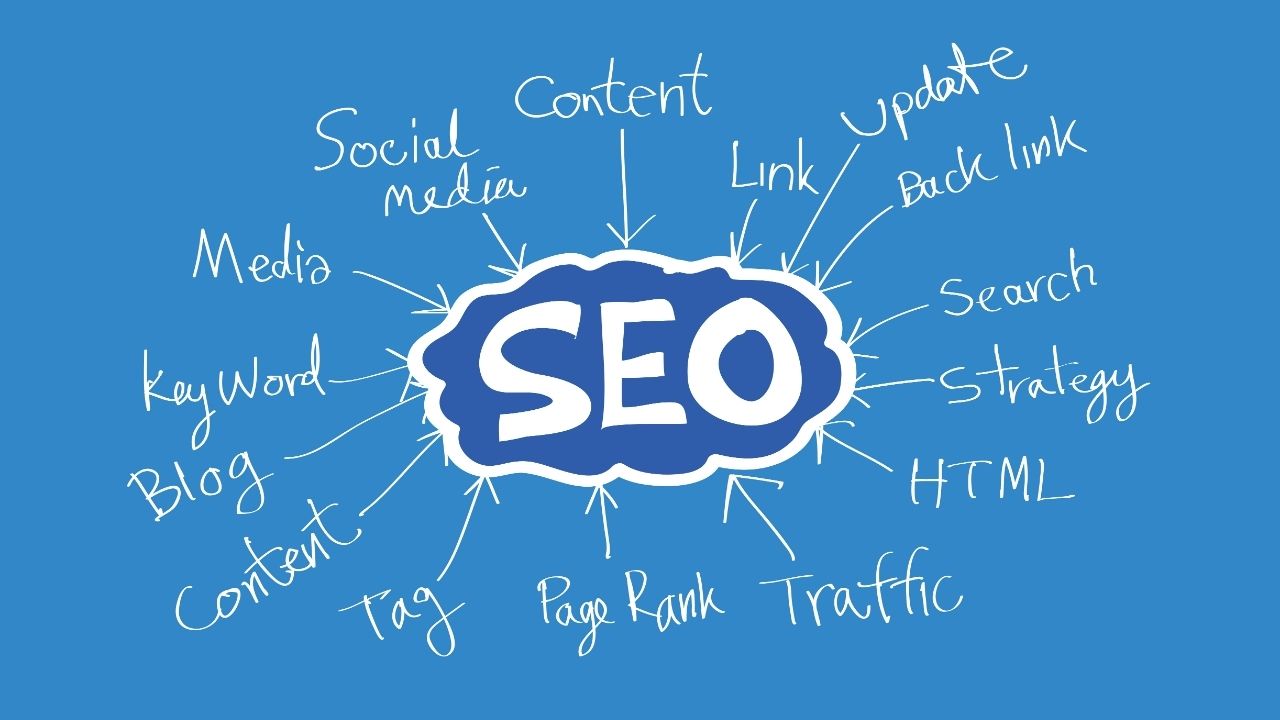
The relationship between code and content has never been more intertwined. For years, developers and content creators operated in separate silos. Writers wrote, and developers built. But in the current search landscape, that divide is a liability.
As we move through 2026, the search engine results page looks nothing like it did five years ago. It is dominated by AI Overviews, zero-click answers, and conversational interfaces. For coders and technical professionals selling their work on marketplaces like Dotartisan, this shift presents a unique opportunity. You understand the architecture of the web better than anyone else. It is time to apply that technical knowledge to your SEO strategy.
This guide is not about keyword stuffing or churning out generic blog posts. It is about leveraging your technical expertise to capture the "long-long tail" of search, a term now used to describe the depth and specificity AI models require to cite your work as an authoritative source .
Why Technical Expertise Wins in the AI Era
To understand why coders are perfectly positioned to dominate SEO in 2026, you need to understand how modern search engines consume information. They no longer just crawl HTML; they attempt to understand entities, relationships, and context. This process is heavily reliant on the structural integrity of your site.
According to industry research, technical SEO foundations are now the prerequisite for AI visibility. Without clean code, strong information architecture, and machine-readable content, your efforts to optimize for generative engines are essentially building a house on sand . AI agents like GPTBot, ClaudeBot, and Perplexity Bot now account for roughly one-third of organic search activity . These agents do not render JavaScript beautifully; they need plain text and logical structure to feed information back to users in real-time conversations.
For the developer selling scripts, plugins, or code snippets, this is your home turf. You know how to structure data. You understand APIs. Now, you need to apply that knowledge to how you present your products and ideas to the machines that matter most.
Understanding the Shift to "Search Everywhere Optimisation"
The concept of SEO has expanded. It is no longer just about Google. It is now about "Search Everywhere Optimisation" . Your potential buyers are searching on traditional search engines, but they are also asking ChatGPT for recommendations, watching tutorials on YouTube, and looking for peer validation on Reddit.
AI assistants pull from this entire ecosystem. If your code is only visible on your Dotartisan profile, you are invisible to the AI agents synthesizing information from multiple sources. The goal in 2026 is to create a distributed footprint of authority that includes your product listings, your technical blog posts, your GitHub activity, and your contributions to developer communities.
Strategy 1: Optimize for the "Long-Long Tail" with Specificity
The "long-long tail" refers to the hyper-specific queries that AI models use to match user intent with precise solutions . Generic queries like "JavaScript plugin" are too broad and will be answered by AI-generated summaries. However, a query like "React hook for form validation with Yup and Tailwind CSS dark mode support" is highly specific.
To capture this traffic, your content must address these exact pain points.
Writing for Ingestion
When you write a blog post or a product description, you are not just writing for a human who lands on the page. You are writing for the AI that decides whether to cite you. This is called "writing for ingestion" .
Use clear definitions: If your script solves a specific problem, define that problem clearly in the first paragraph.
Structure with headings: Use H2 and H3 tags to break down features, installation steps, and use cases.
Be concise: AI models value clarity. Get to the point faster than you think you need to.
"The more complex a system becomes, the more mistakes AI can make when interpreting it. But when you provide clear, structured information, you guide the AI to the right conclusion about your work," says a common sentiment among engineers building for AI discoverability .
Strategy 2: Technical Infrastructure for AI Visibility
If your site or product page is slow, hard to crawl, or poorly structured, you will lose the attention of the AI agent before it even considers your content.
Structured Data is Your Translator
Schema markup acts as a translation layer between your content and AI systems . For a code marketplace like Dotartisan, this is critical. You need to provide AI engines with a roadmap to understand:
Product specifications: What languages is the code written in?
User feedback: What are the reviews and ratings?
Content creator expertise: Who wrote the code and what are their credentials?
Implementing detailed schema for software applications and products helps search engines understand that your "jQuery slider" is actually a "lightweight, accessible image gallery with touch support."
AI-Ready Protocols
In 2026, forward-thinking developers are adopting protocols like llms.txt files and MCP servers. These standards help guide AI crawlers to the most important content on your site efficiently . By creating a file that tells AI agents exactly where to find the documentation, the API reference, and the installation guide, you are effectively giving them a VIP pass to your most valuable information.
Strategy 3: Product-Led Content and E-E-A-T
In the B2B and B2D (Business to Developer) space, buyers are using AI to recommend the best product for their specific use case . They will prompt AI with highly specific queries. The brands that appear will be those that demonstrate value with visual proof and deep insight.
Show, Don't Just Tell
Your content should focus on the "how." Instead of writing a post titled "Top 10 JavaScript Libraries," write a post titled "How to Build a Real-Time Dashboard with Library X and Firebase." This is known as product-led content. It assumes the user knows the problem and wants to see how your product (or the code you are selling) solves it better than the alternatives.
Building Trust Signals
Experience, Expertise, Authoritativeness, and Trustworthiness (E-E-A-T) are non-negotiable for AI visibility in 2026 . AI tools do not cite content that merely repackages existing information; they can generate that themselves. They cite unique insights, original research, and demonstrably trustworthy sources .
Showcase your experience: Include code snippets, benchmarks, and performance tests.
Leverage community insights: Engage on platforms like the Three.js forum or Stack Overflow. These community-driven domains are increasingly serving as primary sources for AI-generated answers . When AI sees you actively solving problems in a forum, it builds your authority signal.
Strategy 4: Capturing the "Answer Engine"
Traditional SEO focused on ranking web pages. Answer Engine Optimisation (AEO) focuses on being the source within the AI-generated answer . This distinction is critical as search engines evolve into answer engines.
The Zero-Click Reality
Research indicates that a significant portion of consumers now rely on zero-click results, and AI Overviews can reduce organic click-through rates dramatically . However, zero-click does not mean zero opportunity. If your code snippet or solution is the one cited inside the AI Overview, you have won the visibility battle. The user may not click immediately, but they have seen your brand. When they are ready to purchase or implement, they will come back to you.
To win at AEO, structure your content with direct answers. If your product page asks, "Is this plugin compatible with React 19?" the answer should be a clear, concise "Yes, it is fully compatible with React 19 and includes hooks for server-side rendering." Do not bury the lede in marketing fluff.
Strategy 5: Diversify Your Content Formats for Citation Stability
AI platforms are now pulling data from a broader set of channels. BrightEdge data shows a significant increase in ecommerce-related YouTube citations for AI Overviews . If you are selling code, consider how you can repurpose your expertise into multiple formats.
Video Tutorials: A YouTube tutorial showing how to install and use your code can be cited by AI.
Interactive Tools: Create a demo or a playground where users can test your code live. Utility-driven content like calculators, demos, and interactive tools are highly valued by AI systems.
GitHub Repositories: Ensure your README files are comprehensive, well-structured, and contain clear documentation. AI crawlers read these.
The Dotartisan Advantage: Building Your Technical Authority
For coders on a marketplace, the challenge is often standing out in a sea of similar offerings. By applying these technical SEO principles, you transform your profile from a simple listing into a citation-worthy resource.
When you write a detailed blog post linked from your Dotartisan profile about "Optimizing Database Queries in WordPress," and you link to a premium script you sell that does exactly that, you are building a thematic cluster of authority. You are telling Google and the AI models that you are not just a vendor; you are an expert.
New Metrics for a New Era
As you implement these strategies, you need to measure them differently. Stop obsessing solely over rankings and page views. Start tracking metrics that matter in an AI-driven world :
AI Presence Rate: For how many of your target queries does your brand appear in AI responses?
Citation Authority: How often are you cited as the primary source?
Share of AI Conversation: How much semantic real estate do you occupy compared to competitors?
You can monitor this by using AI tools yourself. Ask ChatGPT or Perplexity about your area of expertise. Does it recommend your product? Does it cite your blog post? If not, that is your next optimization opportunity.
Future-Proofing Your Code Business
The prediction for the software industry is that trust will be the primary currency in 2026 . Security and reliability are no longer features; they are the foundation. When you sell code, you must communicate that your code is secure, well-tested, and maintained. This builds the trust that AI systems look for.
Furthermore, as the industry consolidates around platforms, having your code available on a trusted marketplace like Dotartisan acts as your "System of Record." It validates your existence and provides a central hub for your authority.
Conclusion: The Coder as the SEO
You can no longer afford to write code in a vacuum and expect someone else to market it. In 2026, the coder must also be the SEO. The good news is that you already possess the logical mindset needed to understand how machines think. By applying that logic to content creation, technical site structure, and multi-platform visibility, you can dominate the long-tail search landscape.
The era of "vibe coding" where non-technical people prompt their way to a product is here, but it is creating a mess of unmaintainable code and shallow solutions . Your deep, technical understanding is your shield and your sword. Use it to build content that is as robust as the applications you create.
Ready to make your code discoverable? Join a community of serious developers at Dotartisan, where quality meets visibility. Start building your technical authority today.
Comments (0)