
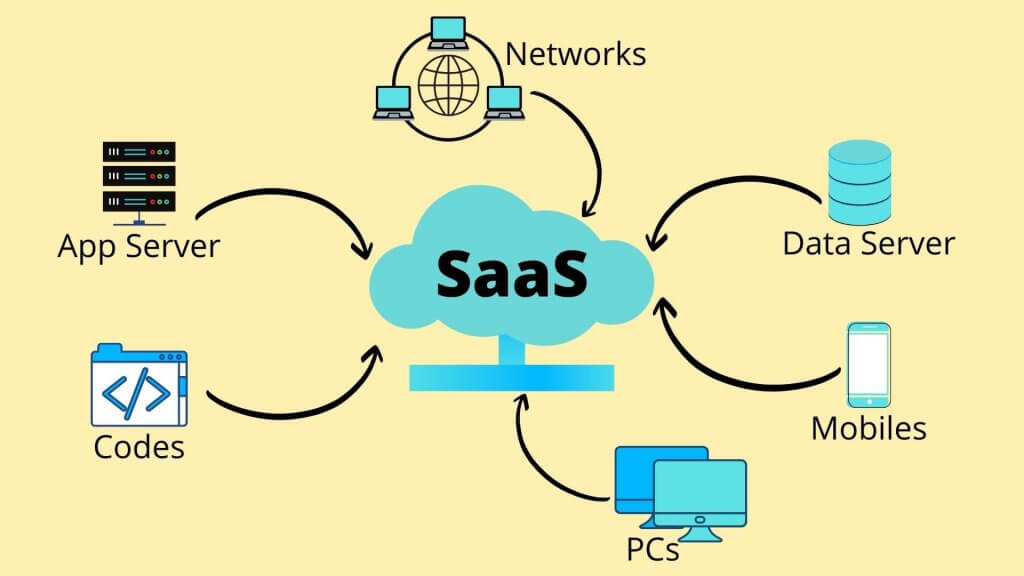
The term "SaaS" gets thrown around a lot, but for developers and entrepreneurs looking to build or buy the next big software platform, one architecture stands above the rest: multi-tenancy. If you have ever browsed a marketplace looking for a script to launch your own software business, you have likely seen the term attached to CRM systems, project management tools, and e-commerce platforms.
But what does it actually mean? And more importantly, why should a developer in Los Angeles or a startup founder building on a budget care?
In the simplest terms, multi-tenancy means that a single instance of a software application serves multiple customers, or "tenants." Think of it like a large apartment building. The building (the server and application) has one address and one roof, but inside, each family has their own private, locked apartment (their data) that no one else can access .
For a marketplace like Dotartisan, understanding this architecture is the key to buying the right script or building an application that can scale from zero to thousands of users without collapsing under its own weight. Today, we are going to break down exactly how this works by looking at the real-world giants who use it and explaining the mechanics behind the curtain.
The Core Concept: One Codebase, Infinite Possibilities
Before we dive into the examples, it is vital to understand the "why." Why do the biggest names in tech all pivot to this model? The answer lies in efficiency and innovation.
SailPoint, a leader in identity security, explains that with multi-tenancy, all customers share a single product codebase . This means when the company develops a new feature or fixes a bug, they do it once, and it deploys to every single customer instantly. There is no chasing down old versions or trying to convince clients to upgrade.
"No customer is ever left behind on an old version," SailPoint notes. "As soon as a feature is ready and tested in preview, it is pushed to production for the entire user base" . For a developer selling a script on Dotartisan, this is the gold standard. It means your product is always modern, always secure, and always valuable to the end-user.
So, how does this look when applied to the software we use every day? Let’s look at three distinct examples.
Example 1: The CRM Giant - Salesforce
When people talk about cloud software, Salesforce is usually the first name out of their mouths. They are the pioneer of the multi-tenant model in the enterprise space .
How It Works
If you are a company using Salesforce, you log in and see your company name, your specific logo, your sales pipeline, and your customer data. If a competitor logs in, they see a completely different world. Yet, both of you are touching the exact same application code.
According to architectural breakdowns of platforms like Salesforce, the magic happens in how they handle customization. Each company (tenant) has its own unique database schema within a shared database. The custom layouts, the specific fields they add for their industry, and the workflow rules they set are stored as metadata. This "metadata architecture" allows for highly personalized experiences without the developer having to fork the core application code for each client .
The Lesson for Script Buyers
If you are looking to buy a CRM script on Dotartisan, you need to look for one that emphasizes this metadata-driven approach. A cheap script might simply copy the code for every new client, which creates a maintenance nightmare. A great multi-tenant script uses a single codebase and simply changes the view based on who is logged in.
Example 2: The No-Code Commerce Builder - Ucraft
Closer to home for many Los Angeles entrepreneurs is the e-commerce space. Ucraft, a US-based software company, provides a no-code website and eCommerce platform that empowers individuals and brands to launch their digital presence quickly .
Ucraft needed a way to manage potentially hundreds of thousands of online stores without hiring a dedicated team for each one. Their solution was to adopt a Laravel Multi-Company SaaS architecture powered by Bagisto .
How It Works
In Ucraft’s model, the platform hosts a "Super Admin" who oversees all merchant operations. However, each individual merchant gets full control over their own domain, their store theme, and their dashboard. It is a perfect example of the "silo" model, where the data is strictly separated even though the infrastructure is shared.
"The software company enhances its no-code website and eCommerce platform, enabling quick setup of domain-based stores," the case study explains. "Merchants control domains, themes, and dashboards fully, creating a personalized management experience" .
The Lesson for Script Buyers
If you are buying an e-commerce multi-tenant script, look for features like:
Domain-specific customization: Can each tenant use their own URL?
Real-time admin notifications: Does the platform owner know when a tenant hits a milestone?
Scalable performance: Was the script optimized with tools like Laravel Octane to handle hundreds of stores simultaneously?
Example 3: The Insurance Innovator - Wefox Italy
For a more technical deep dive, we look to Wefox Italy, a leading insurance company that needed to build a platform for various internal teams and external clients. They required robust data and resource isolation .
They built their solution on Amazon EKS (Elastic Kubernetes Service) using a sophisticated control plane versus data plane architecture .
How It Works
Wefox separated their environment into three distinct clusters:
The SaaS Control Plane Cluster: This hosts the core services that run the business, like tenant management and centralized monitoring.
The Application Shared Services Cluster: This handles system-wide capabilities like API Gateways and Authorization.
The Business Applications Cluster: This is where the actual customer workloads run .
When a new tenant (customer) is onboarded, the system automatically creates a dedicated "realm" for their identity, provisions the necessary infrastructure using Terraform (Infrastructure as Code), and deploys the application using GitOps principles . This ensures that every tenant gets the exact same standardized, secure environment.
The Lesson for Script Buyers
This example shows the high end of the market. If you are a developer looking to sell a script that enterprises will trust, you need to consider concepts like tenant onboarding automation. Can your script automatically spin up a new database schema and configure a new namespace when a user signs up? If it can, you have an enterprise-grade product.
How Isolation Works: Protecting the "Neighbors"
The biggest fear with multi-tenancy is the "noisy neighbor" problem. What if one tenant’s massive data usage slows down the database for everyone else? Or worse, what if one tenant can see another tenant's data?
This is where the technical architecture of a good SaaS script separates itself from a bad one. The Oracle Cloud Infrastructure documentation outlines several strategies for data isolation that a good script should implement .
The Three Levels of Isolation
A quality multi-tenant script will handle data security at the database level using one of these three methods:
The Discriminator Column (Most Common): In this model, every table in the database has a tenant_id column. When a user logs in, the application captures their ID and automatically appends WHERE tenant_id = ? to every single database query. This is usually enforced by the application's Data Access Layer or an ORM hook . It is efficient but relies on the developer never forgetting to add that clause.
Schema Per Tenant: Here, the same database instance holds multiple separate schemas (e.g., tenant1_, tenant2_). The application switches the database connection to the correct schema based on the logged-in user. This offers better logical separation than a single column.
Database Per Tenant: This is the "nuclear option" for maximum security. Each tenant gets their own physically separate database instance. This is great for compliance and performance but is expensive and harder to manage .
The Identity Layer
A modern script also handles isolation at the identity level. Using standards like JSON Web Tokens (JWT), the authentication service can embed the tenant_id directly into the token. Then, an API Gateway can validate that token on every request, ensuring that a user from Tenant A cannot accidentally (or maliciously) call an API endpoint meant for Tenant B .
The Innovation Advantage
Why should you, as a buyer or seller on Dotartisan, prioritize multi-tenant scripts over single-tenant or outdated "site-builder" scripts?
According to SailPoint, "Multi-tenancy fundamentally accelerates innovation" . Because the platform is unified, the provider can seamlessly plug in new components, like a cutting-edge analytics engine or an AI service, and make them available to all tenants simultaneously.
For a developer in Los Angeles trying to break into the market, this means you can build a Minimum Viable Product (MVP) that is lean but has the bones of a giant. You can launch with one customer, knowing that when you get to one thousand customers, you won't have to rewrite the code. You just turn up the dial on your server.
Building Your Multi-Tenant Future
The examples of Salesforce, Ucraft, and Wefox show that multi-tenancy scales from the smallest startup to the largest enterprise. Whether you are managing internal business units or millions of external customers, the architecture remains the same: share what can be shared, isolate what must be protected.
For the Dotartisan community, the message is clear. If you are buying a script, look for those that mention tenant management, data isolation strategies, and centralized codebases. If you are selling a script, building it on multi-tenant principles from day one makes it infinitely more valuable to buyers who are looking for a sustainable business, not just a prototype.
The future of software is shared. Make sure your code is ready for it.
Are you a developer with a multi-tenant script to sell? Or an entrepreneur looking for the perfect SaaS foundation? Join the Dotartisan community today and connect with buyers and sellers who understand the value of smart architecture.
Comments (0)